Column assist: packaging and NVH can decide the motor envelope
In the company's annual report, C-EPS means a motor and controller packaged at the steering column. That placement constrains the available space and makes noise and vibration conspicuous to the driver. The public YDC catalogue does not say that every named variant fits a column installation, so the buyer must map the candidate to the actual gearbox, controller and mounting arrangement.
Confirm before ordering Share column and reduction-unit drawings, available axial/radial envelope, assist torque-speed duty, bus voltage and transients, acoustic targets, sensor/connector allocation and hot/cold operating limits. Ask which exact YDC drawing and revision the sample will follow.
Pinion or rack assist: validate the load path, not just a peak torque
The same report distinguishes pinion- and rack-mounted EPS architectures because motor placement and steering force differ. That is a description of EPS systems, not a published allocation of Dechang's YDC01 or YDC62 variants to those architectures. A motor can satisfy a headline torque point and still fail continuous assist, thermal or response requirements in the assembled gear unit.
Confirm before ordering Provide the steering architecture, gear ratio and efficiency assumptions, continuous and transient assist trace, mounting and shaft interface, controller current limit, thermal path and fault-handling responsibility. Request matched motor/ECU maps and endurance evidence at the system duty, not an isolated maximum value.
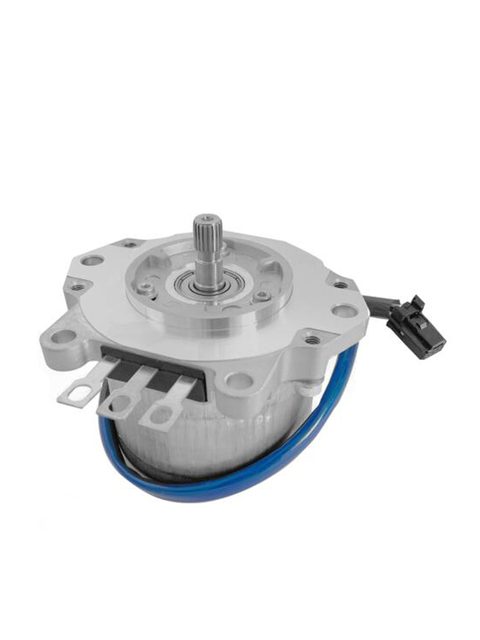
View Automotive EPS brushless motor →




 LinkedIn
 Facebook
 X
 WhatsApp
 Email