01 / THREE DIFFERENT DESIGN-IN JOBS
A fan, a drum and a vehicle each need a different motor brief
Range hood: qualify the motor with the fan and duct
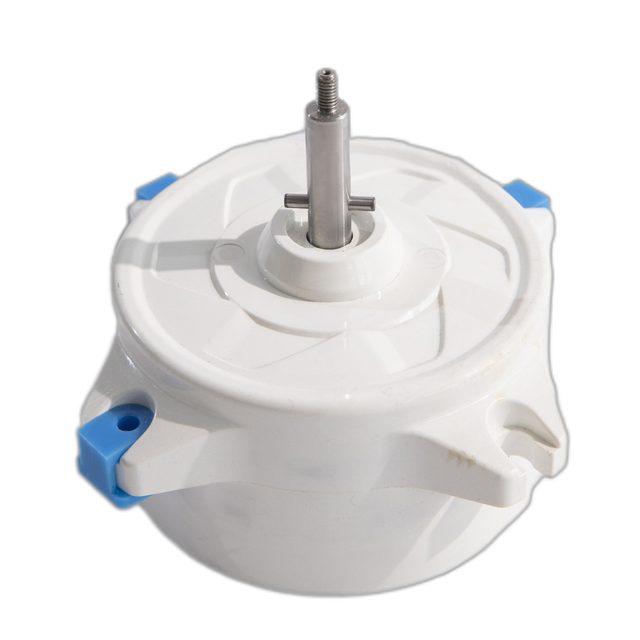
The maker lists BLDC120, BLDC95 and BLDC88 hood-motor families separately. These labels identify catalogue families, not a published set of interchangeable shaft, winding or controller specifications. Airflow and noise depend on the impeller, housing and duct resistance as well as the motor. An OEM substitute should be tested in the complete hood across speed settings, not accepted on nominal wattage alone.
Confirm before ordering Send impeller diameter and inertia, housing and mount drawings, mains and internal DC supply, control method, speed range, duct pressure points, target acoustic limit and thermal envelope. Request a complete motor-controller pairing, fan curve, noise test and exact approval scope.
View DC range hood motor →
Laundry: distinguish wash agitation from high-speed spin
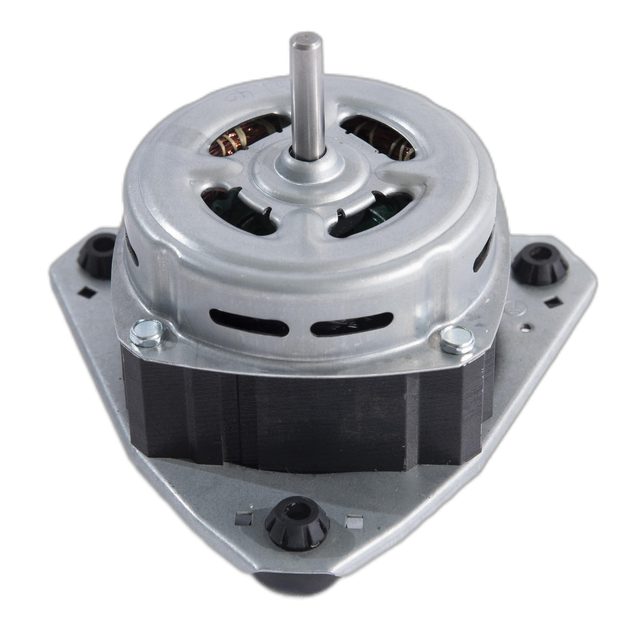
Jeamo's company catalogue identifies washing-machine motors among its long-standing AC and DC appliance business. A washer needs low-speed reversing torque and a high-speed spin envelope, with very different duty and vibration conditions. Do not transfer a hood BLDC rating or a generic AC-motor label to the drum drive. Specify the complete machine architecture before comparing motors.
Confirm before ordering Provide drum and pulley or direct-drive geometry, loaded drum inertia, wash/spin duty trace, reversing frequency, imbalance tolerance, inverter or capacitor arrangement, insulation and moisture exposure. Ask for the exact design's torque-speed curve, bearing-life assumptions, vibration and wash-cycle endurance tests.
View AC laundry motor →
Vehicle PM drive: motor performance is a system claim
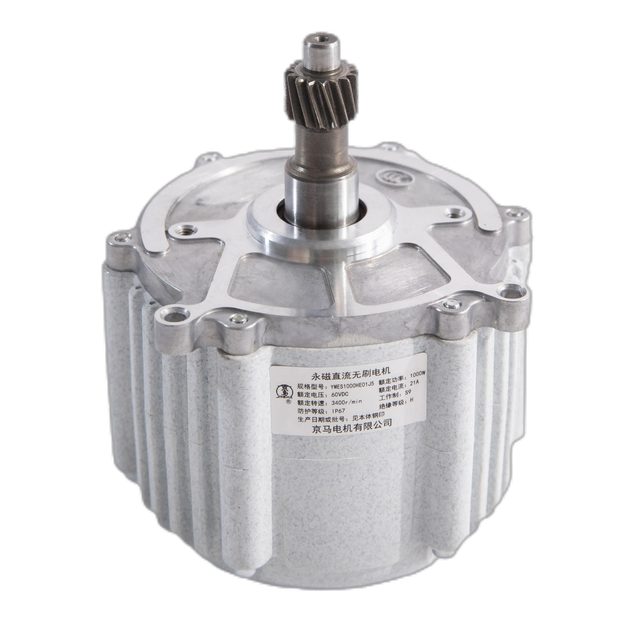
The current Chinese catalogue separately lists vehicle permanent-magnet synchronous motors and new-energy-vehicle stator/rotor core products. A loose core is not a tested complete traction motor; a motor image is not a vehicle qualification dossier. Inverter, gearbox, coolant, insulation and functional-safety responsibility must be defined at the system boundary.
Confirm before ordering Identify vehicle class, drive axle, DC bus and inverter, continuous/peak torque-speed and duration, regeneration, coolant, envelope, shaft and resolver/encoder interface. Request revision-controlled drawings, dynamometer maps, thermal and durability reports, change-control process and validation ownership.
View Automotive permanent-magnet synchronous motor →



 LinkedIn
 Facebook
 X
 WhatsApp
 Email