Charging a passenger vehicle or commercial vehicle
The manufacturer's own catalogue separates passenger-car alternators at 14 V / 60–150 A from commercial-vehicle alternators at 28 V / 45–200 A. These are family ranges, not one unit's tested output. Its separate high-efficiency 14 V family is listed at 130–220 A, with different rectifier and regulator options. None of these labels proves a drop-in cross-reference for a particular engine.
Confirm before ordering Specify the vehicle's bus, engine idle and maximum pulley speed, electrical load, regulator communication, pulley geometry, mounting ears and original part reference. Request the exact proposed unit's hot output-versus-speed curve and drawing.
Cranking a conventional or stop-start engine
Halla lists passenger, commercial and stop-start starters separately. Its commercial-starter page gives 12 V / 2.0–3.5 kW and 24 V / 3.0–8.0 kW family ranges; its stop-start page gives 12 V / 1.2–2.5 kW. Those ranges do not identify pinion travel, ring-gear engagement, cold-crank performance or allowable repetition for any one part.
Confirm before ordering Provide engine and flywheel references, ring-gear tooth count, pinion and flange dimensions, rotation, battery behavior at the cold-start condition, and starts per duty cycle. Ask for engagement and endurance test conditions.
Integrated electrified drive or auxiliary air movement
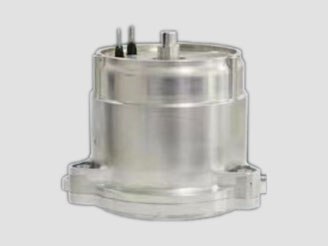
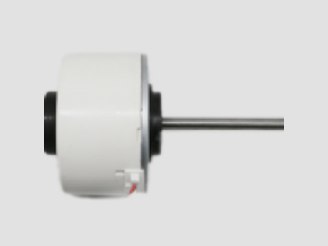
The catalogue also separates a high-voltage starter-generator, a three-in-one drive, a 12 V permanent-magnet synchronous motor, an electronic water pump and a 310 V DC brushless motor for air conditioners, air purifiers and fan-coil units. A drive-system headline range is not a motor-only continuous rating, and a vehicle starter-generator is not an HVAC fan motor.
Confirm before ordering Name the complete application and system boundary first: DC bus, inverter or regulator, mechanical output, cooling, commanded duty and the relevant validation programme.




 LinkedIn
 Facebook
 X
 WhatsApp
 Email