AC: a tool or garden-machine integration
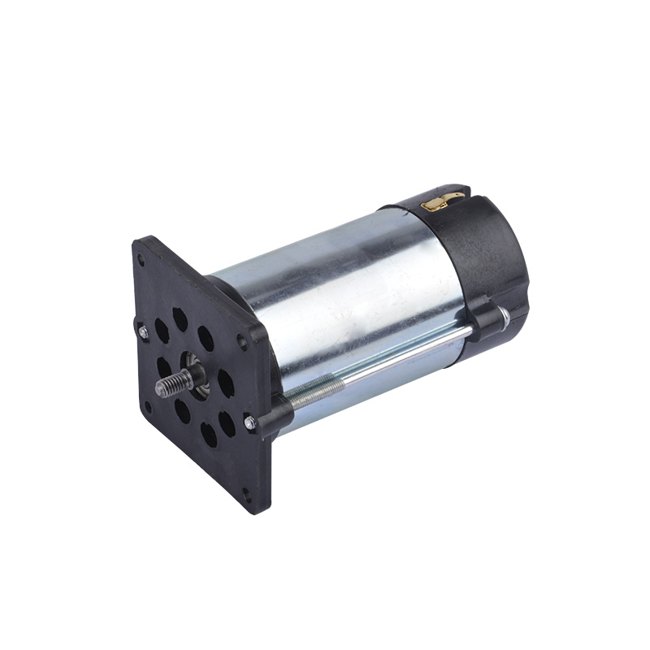
The maker's AC catalogue separates 49.2-series saw/oscillating-tool use, 54-series grass-trimmer use, and 56-series hedge-trimmer use. The individual tables give different family ranges: for example, the 49.2 page lists 300–500 W and 15,000–25,000 rpm, whereas the 54 page lists 200–450 W and 8,000–15,000 rpm. These are catalogue ranges, not simultaneous ratings for any one winding or assembled tool. Some category tiles point to the same detail page despite different captions; use the detail-page table and request the current motor code rather than infer a configuration from a tile.
Confirm before ordering Send tool function, mains supply and market, duty cycle, target shaft speed under load, cooling airflow, shaft/lamination stack dimensions, insulation requirement and thermal limits. Request the current winding code, drawing, rated-point test and compliance documents for the exact finished motor and tool market.
View AC motor range →
Brushless: choose rotor layout and supply with its controller
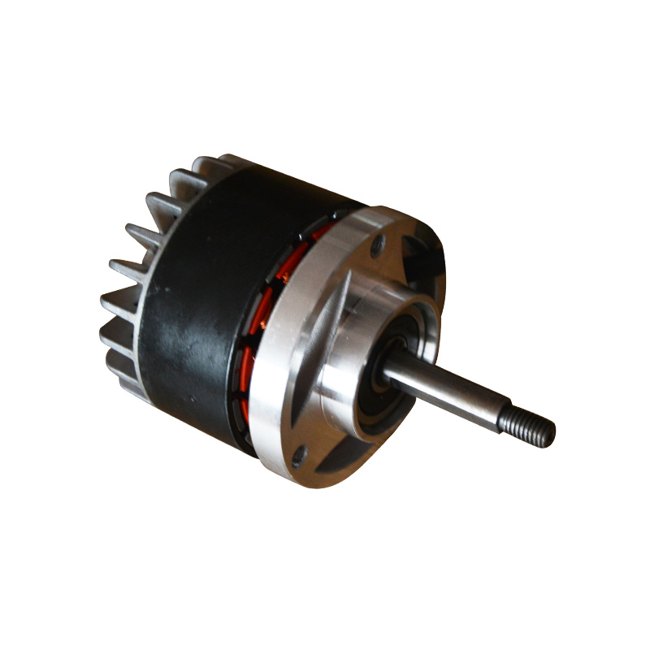
The official LSM-OBL75 page describes an external-rotor motor with controller for power/garden tools and lists a family voltage range of 18–58 V. Lanshan separately lists an inner-rotor LSM-BL100 controller package in high-voltage AC 110–230 V and low-voltage DC 18–58 V versions, aimed at different machine uses. Those BL100 versions are not one universal input option: controller, insulation, protection and mechanical interfaces need the selected version's own documents. Catalogue power, speed and torque ranges should not be combined into a fictional single operating point.
Confirm before ordering Specify battery or mains input, controller location and heat rejection, commanded speed/torque profile, startup and stall conditions, available rotor envelope, connector and EMC constraints. Ask for the exact motor-controller pair, torque-speed curve at the chosen input and temperature, outline drawing, protection behaviour and test evidence.
View Brushless DC motor range →



 LinkedIn
 Facebook
 X
 WhatsApp
 Email