01 / TWO DIFFERENT DRIVE ARCHITECTURES
Select the machine and power system before a motor family
Squirrel-cage induction: evaluate grid and VFD options separately
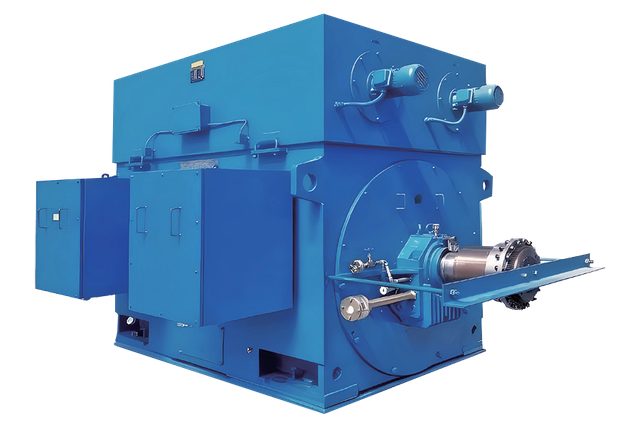
The official YPKK/YPKS/YX family page covers horizontal IMB3 machines, with direct or inverter starting and grid-frequency or variable-frequency operation among catalogue options. It also lists several cooling and enclosure codes. These are configuration choices across a family, not one motor carrying every voltage, cooling system and protection level simultaneously. A large pump, fan or compressor project must first check supply stiffness, starting torque and voltage dip.
Confirm before ordering Provide load torque and inertia, rated and starting voltage, transformer/feeder impedance, permitted voltage dip, starting frequency, VFD harmonic limits, motor room temperature and cooling-water or air availability. Request a specific motor code, acceleration/thermal study, outline and guaranteed losses at the actual duty point.
View YPKK / YPKS squirrel-cage induction motor →
Box-type PM synchronous: include the converter in every comparison
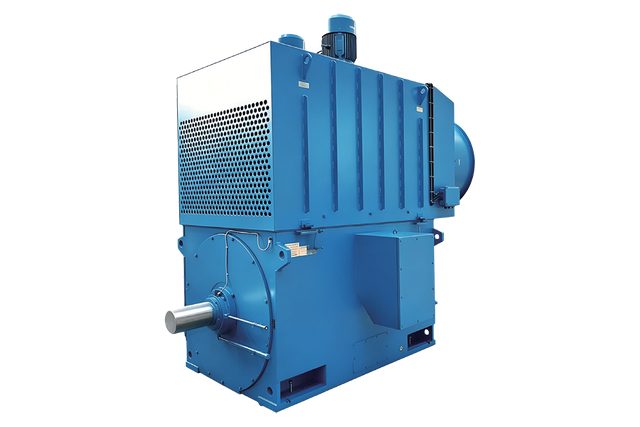
SEC's TYCKK/TYCKS page describes permanent-magnet excitation, VFD starting and VFD operation, with horizontal and vertical arrangements among family options. The site notes some low-speed direct-drive use that can remove a gearbox, but that changes shaft loads, bearing and foundation requirements. Do not compare its family efficiency claim with an induction motor at different speed or load, and do not connect this design directly to a grid supply without an approved drive system.
Confirm before ordering Send the complete speed-torque and duty trace, converter topology and DC-link arrangement, regeneration and stop cases, coupling/gearbox decision, rotor thermal limit, cooling circuit, feedback and bearing loads. Ask for matched converter settings, demagnetisation margin, site acceptance tests and responsibility for integration.
View TYCKK / TYCKS permanent-magnet synchronous motor →
Hazardous area or special machine? Stop at the family boundary
The maker also lists flameproof, increased-safety, pressurised and dust-protected designs, plus hoist and mill motors. These are separate product families. Neither of the two general industrial series above should be assumed suitable for a classified gas/dust zone or a mine hoist merely because the company manufactures such equipment elsewhere.
Confirm before ordering Specify zone, gas or dust group, temperature class and jurisdiction, or the hoist's complete safety architecture. Request the exact approved model, certificate scope and protection drawings before treating a plant-wide qualification statement as applicable.


 LinkedIn
 Facebook
 X
 WhatsApp
 Email