01 / HOW THE MACHINE CHANGES SPEED
First decide whether the machine runs at one speed, stepped speeds or on an inverter
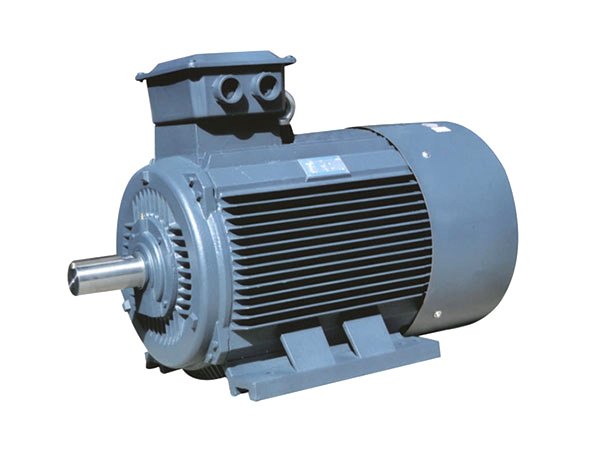
YE3/YE4: fixed-frequency induction duty
The catalogue presents YE3, YE4 and a newer YE5 heading as separate efficiency families. A buyer should compare a selected frame, pole count and rated load rather than assuming the series number alone establishes today's efficiency class. The YE4 page cites older GB 18613 and IEC/European efficiency wording, including an IE2 reference that conflicts with its 'ultra-high efficiency' title. That page is not a current destination-market compliance certificate.
Confirm before ordering Supply exact output, load profile, supply, starts, ambient, mounting and target market. Request the current model performance table and test report against the present applicable standard, with test edition and rated point stated.
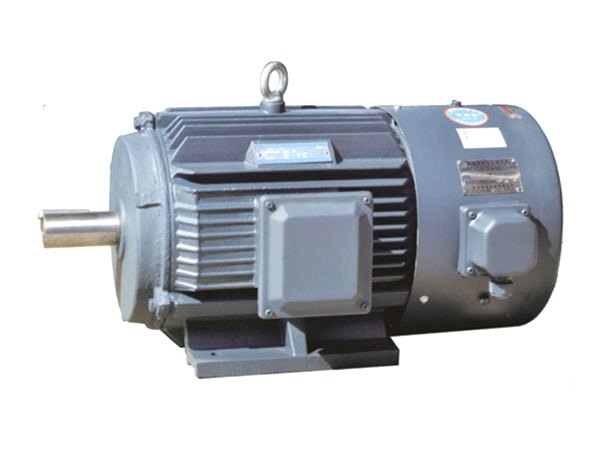
YD: discrete pole-change steps
The YD entry calls itself a pole-changing multi-speed derivative of the Y2 family. It is a staged speed change tied to winding/pole configuration and switchgear, not a continuous inverter speed command. The page states 380 V, 50 Hz, S1 and IP44 as family operating conditions; those do not identify which winding combination or torque is offered for an individual machine.
Confirm before ordering Send each required speed and load torque, changeover sequence, number of starts, contactor/interlock scheme and shaft inertia. Request the exact pole/connection diagram and rated output at every speed.
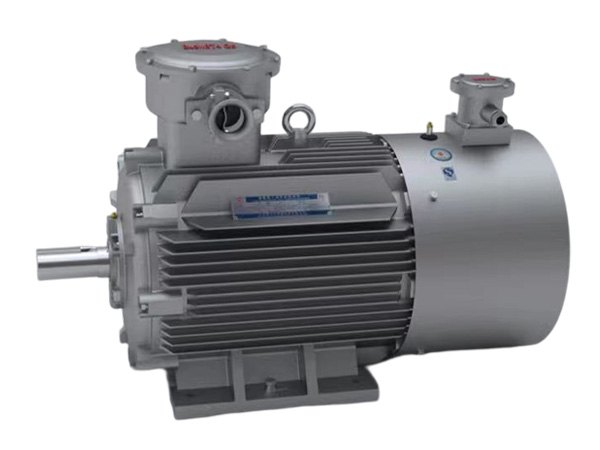
YVFE2: inverter-fed continuous variation, with a catalogue mismatch
The YVFE2 page describes a separately ventilated drive-fed motor and IC416 cooling. Its prose says operation from 3 Hz and IP54/IP55, while its usage table says 5–50 Hz constant torque, 50–100 Hz constant power and IP54. Those are conflicting bounds on the same public page; 3 Hz operation or IP55 cannot be guaranteed for a selected motor without a revised specification.
Confirm before ordering Provide drive model, minimum continuous frequency, torque-versus-speed requirement, overload and reversal cycle, cable length and bearing/cooling constraints. Ask for an exact low-speed thermal curve, enclosure rating, mounting form and tested motor-drive pairing.




 LinkedIn
 Facebook
 X
 WhatsApp
 Email