

Application-specific motors
Micro electric drive systems
Zhejiang Founder Motor Co.,Ltd- Power
- 0.06–1.2 kW
- Voltage
- Confirm supply
 0
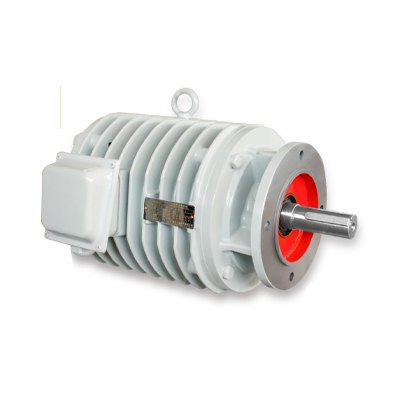
Manufacturer catalogue image · Series illustration

Catalogue series · Exact configuration and availability confirmed by the manufacturer.
Chuangxin separates YGa working-roller motors from YGb conveying-roller motors. The two families are not interchangeable simply because the frame and pole count match: their tables describe different duties and distinguish running quantities from locked-rotor quantities.
| YGa160L2-8: a working-roller entry | At the stated 380 V / 50 Hz, the table lists 5.3 kW, 210 Nm locked-rotor torque, 56 A locked-rotor current and rotor inertia of 0.139 kg·m². Its speed-group heading is 750 rpm synchronous speed. The row does not give a loaded running speed or a continuous rated-current value; 56 A must not be labelled as either. |
|---|---|
| YGb160L2-8: a continuous conveying-roller entry | The corresponding YGb row lists 5.6 kW, 695 rpm and 14 A under continuous duty, plus 190 Nm locked-rotor torque and 75 A locked-rotor current. Its rotor inertia is also 0.139 kg·m². The loaded 695 rpm value and the 750 rpm synchronous heading describe different things. |
| A higher locked-rotor torque is not a continuous holding rating | These figures help distinguish the builds, but neither table establishes an unlimited stall duration. A stopped roller under power requires a specific thermal and control assessment. State the stall/jam conditions and protective response required; do not choose the YGa entry merely because 210 Nm is larger than 190 Nm. |
Identify whether the roller is part of the working table or conveys material between operations. Record material mass, roller diameter, gearing, required surface speed and the number of driven rollers sharing the load. The series selection should follow that function rather than the old motor’s power alone.
Provide a timing sequence for acceleration, loaded running, coasting, braking, reversal, pauses and any expected jam. YGa tables include different dynamic-constant columns for 15%, 25%, 40% and 60% duty factors, separately from rotor inertia. Do not treat those dynamic constants as the motor’s physical inertia or derive an approved starts-per-hour figure from them without the applicable selection method.
The published family description assigns class H insulation to YGa. For YGb it lists class F for frames 112–200 and class H at frame 225. Describe ambient heat, hot-material exposure and dust at the installation, and obtain the selected motor’s environmental limits and enclosure rating. Insulation class alone does not establish an allowed surrounding temperature.
State the reversing and braking method and whether a converter is involved; these are selection inputs, not an assumption that every listed motor accepts every drive setting. Attach the existing flange, shaft and terminal-box layout and request the offered model’s drawing, protection settings and permissible duty with the quotation.
CATALOGUE OVERVIEW
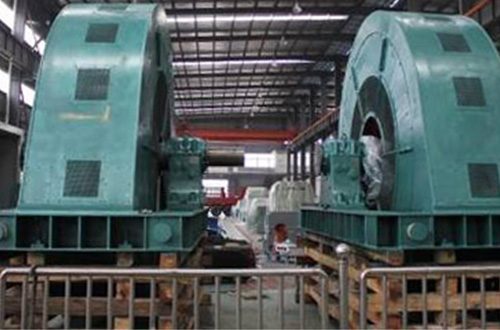
Chuangxin’s YG roller-table family distinguishes YGa motors for working rollers from YGb motors for conveying rollers in steel plants. The source describes repeated starting, braking, reversing and plugging in hot, dusty conditions. YGa uses H-class insulation; YGb is listed with F class in 112–200 mm frames and H class at 225 mm. Select the roller function and duty cycle before choosing a frame.
Specifications describe a series range; confirm which ratings apply together to the quoted model.
Confirm mounting and shaft dimensions against the drawing for the quoted configuration.
Application-specific motors
Application-specific motors
Application-specific motors
Application-specific motors
Keep your sourcing team on the same page.
We use cookies to keep this site working and measure website usage. Cookie & privacy details
 LinkedIn
 Facebook
 X
 WhatsApp
 Email