

Application-specific motors
Micro electric drive systems
Zhejiang Founder Motor Co.,Ltd- Power
- 0.06–1.2 kW
- Voltage
- Confirm supply
 0
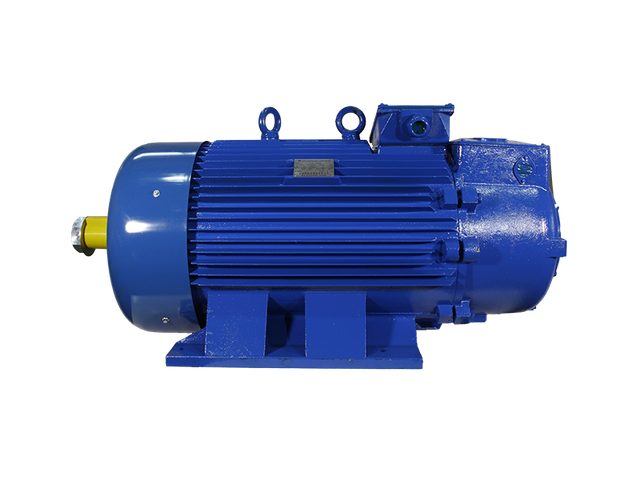
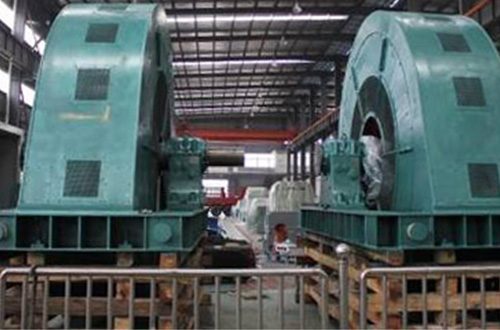
Manufacturer catalogue image · Series illustration

Catalogue series · Exact configuration and availability confirmed by the manufacturer.
A YZR wound-rotor motor is selected with its crane motion, rotor control and repeating load cycle. The same frame has different catalogue outputs at different duty factors; a short lift followed by cooling is not equivalent to frequent starts and electrical braking. Use the worked 200L-6 example below to prepare a motor-and-control enquiry.
The manufacturer’s table 8-2 lists the following values at 380 V. S3 duty uses a ten-minute cycle; the lower running speed at higher short-cycle output is part of the same table, not a different pole count. These entries are not interchangeable continuous ratings.
| Duty entry | Output / speed | Stator / rotor current |
|---|---|---|
| S3 15% | 33 kW / 950 rpm | 69 A / 113 A |
| S3 25% | 26 kW / 965 rpm | 56 A / 86 A |
| S3 40% baseline | 22 kW / 970 rpm | 49 A / 72 A |
| S3 60% | 19 kW / 975 rpm | 45 A / 62 A |
| S3 100% table entry | 17 kW / 978 rpm | 42 A / 55 A |
| S2 30 minutes | 26 kW / 965 rpm | 56 A / 86 A |
At the catalogue’s ten-minute cycle, 40% corresponds to four minutes at load and six minutes off. S3 assumes starting does not materially affect heating. A crane with substantial acceleration losses cannot be sized from running time alone.
The manual distinguishes S4, which includes starting, and S5, which includes starting and electrical braking. Send starts per hour, acceleration and braking times, load torque through the motion and the inertia reflected to the motor shaft. Ask for the matching S4 or S5 rating rather than applying the 33 kW S3 15% entry to repeated hoisting.
State whether this motor drives the hoist, trolley or bridge, and describe reversal, lowering and holding arrangements. The catalogue also contains YZRE brake motors; their brake-torque entries do not describe a plain YZR motor or establish the holding capacity of a complete hoist.
For YZR200L-6 at S3 40%, the table gives 200 V rotor voltage and 72 A rotor current, alongside 380 V and 49 A on the stator. Give the control supplier the full motor sheet, rotor-resistance arrangement and switching sequence. The separately listed 26.6 A is no-load current, not the rotor-current rating.
The manual lists single tapered-shaft IM1003 for frames 180–400 and double tapered-shaft IM1004 in the same range. Its bearing table distinguishes IM1 and IM3 arrangements: frames 200/225 use a 6315 non-drive-end bearing in IM1, versus 7315AC in IM3. Send the existing mounting and shaft drawing before accepting an interchange.
The brush table gives 32 × 12.5 × 50 mm brushes and a 140 mm slip-ring diameter for frames 200/225. Confirm the brush material, spring assembly and spare-part designation with the selected motor. Leave service access to inspect and replace the brushes instead of treating this as a maintenance-free cage motor.
The manual separates general crane construction, IP44 with class F insulation and ambient up to 40°C, from metallurgical construction, IP54 with class H and ambient up to 60°C. State temperature, dust exposure and altitude; the stated altitude limit is 1,000 m. Do not assume the metallurgical construction is supplied on every YZR order.
CATALOGUE OVERVIEW
Xindali lists YZR wound-rotor three-phase induction motors for crane and metallurgical drives, with a published range of 1.5–710 kW and frames 112–560. Start selection with the hoisting duty, starts per hour, load cycle and control arrangement. Ask for the exact rotor circuit, brake interface and installation dimensions; the family listing is not a complete hoist drive specification.
Specifications describe a series range; confirm which ratings apply together to the quoted model.
Confirm mounting and shaft dimensions against the drawing for the quoted configuration.
Application-specific motors
Application-specific motors
Application-specific motors
Application-specific motors
Keep your sourcing team on the same page.
We use cookies to keep this site working and measure website usage. Cookie & privacy details
 LinkedIn
 Facebook
 X
 WhatsApp
 Email