


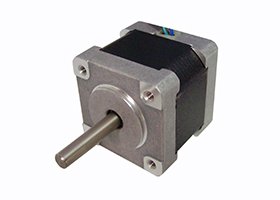
Stepper motors
Two-phase hybrid stepper motor series
Beijing Helishi Electric Motor Technology Co., Ltd.- Step Angle
- 1.8°
- Example Model
- 42BYG250BK-0151
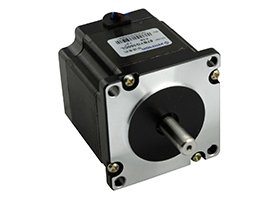
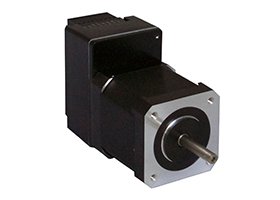
Manufacturer catalogue image · Series illustration
 SYN-TRON View manufacturer →
Catalogue series · Exact configuration and availability confirmed by the manufacturer.
Open original manufacturer source ↗CATALOGUE OVERVIEW
SYNTRON three-phase hybrid steppers use a 1.2-degree step angle. The manufacturer lists frame families from 57 through 130 and holding-torque ratings from 0.45 to 45 N·m across different models. These values describe the series envelope, not a single motor.
Use the model table to match phase current and winding characteristics to a compatible three-phase driver. Ask for the running torque at your target speed, shaft drawing and permissible acceleration; a larger holding-torque number alone does not establish suitability for a fast positioning axis.
Model / series reference: Three-phase hybrid
Use these ratings to shortlist the series. A range does not mean every combination is available.
Request current pricing, MOQ, lead time and a dimensioned drawing for the exact configuration offered. Catalogue drawings may cover several variants.
Holding torque is measured at standstill. Request a torque-speed curve at the actual supply voltage before choosing a motor for moving loads.
Use the Three-phase hybrid reference when requesting a datasheet from SYN-TRON. Confirm these requirements against the exact offered model before comparing quotations.
Stepper motors
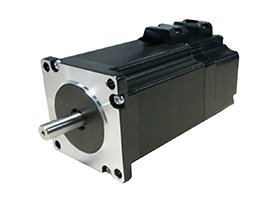
Stepper motors
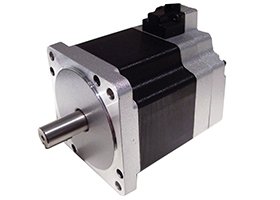
Stepper motors
Stepper motors
Keep your sourcing team on the same page.
Help us improve motor sourcing. Allow usage measurement with Google Analytics? Privacy details
 LinkedIn
 Facebook
 X
X WhatsApp
 Email
Email